Click on the image to enlarge it
Covercrop Light
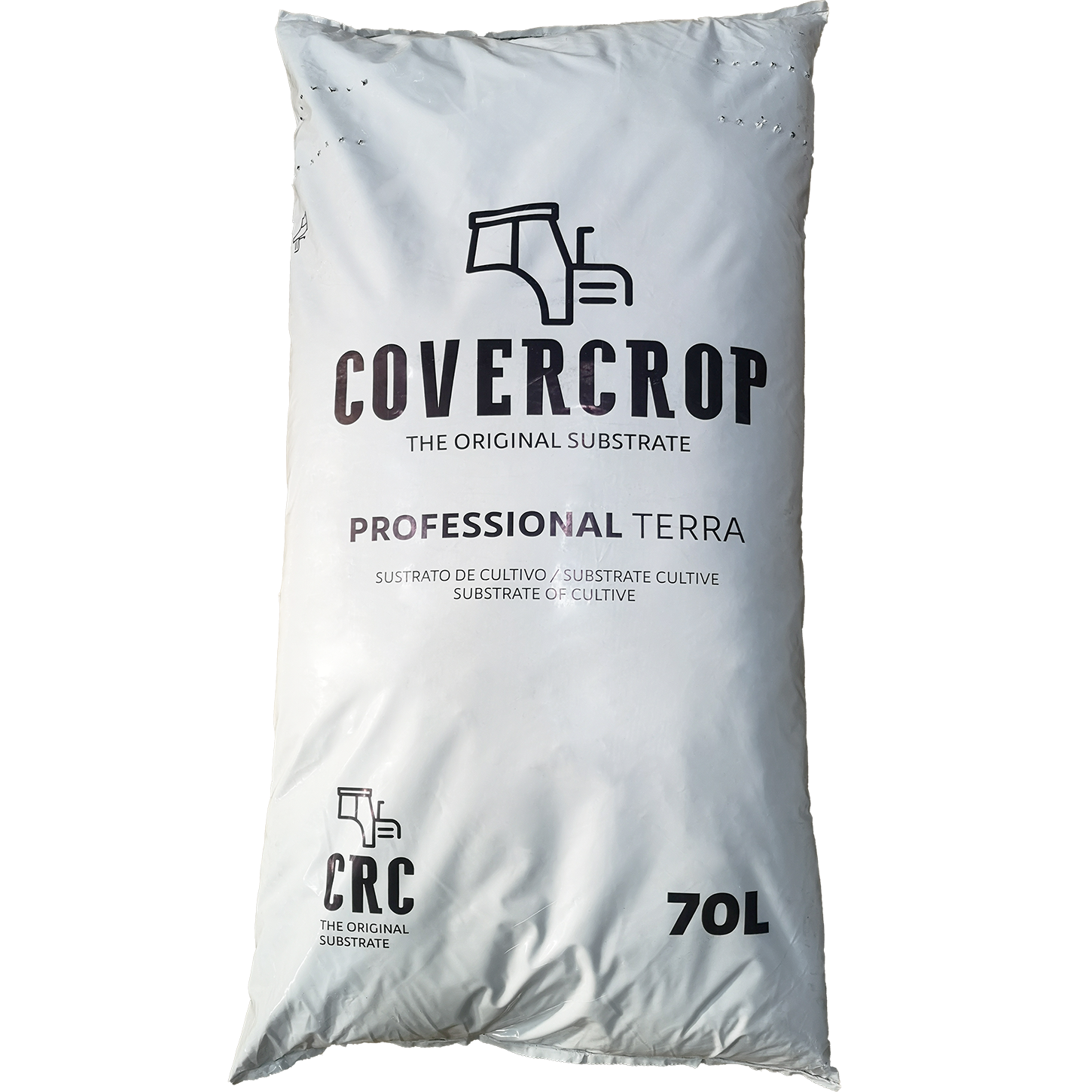
Covercrop is a high-quality substrate manufactured primarily from Sphagnum peat, perlite, coconut fibre, trace elements, and humic and fulvic acids. More than just a simple Lightmix so that you can start your cultivation with a reliable, high-quality substrate. Free from pathogens and diseases.
Covercrop contains mainly peat derived from the well-known peat moss or Sphagnum, which is the generic name for more than 200 species of moss that grow together. Sphagnum peat is renowned for its water retention capacity, holding up to 20 times its dry weight in water.
Covercrop's factories dry the moss and process it to sterilise it and prepare it for mixing with the remaining organic components of this outstanding substrate.
Coconut fibre, perlite and a small amount of worm humus are added to the Sphagnum. The improvement is remarkable, as the perlite, together with the coconut fibre, helps the substrate remain porous and free-draining after repeated watering. Worm humus is an organic fertiliser that provides slow-release nutrients, ideal for the proliferation of the soil's macrobiotic life and as the plants' first source of nourishment.
The quality of the Covercrop substrate is completed with the addition of Trichoderma and mycorrhizae, based on dried and ground mycorrhizal root powder. This is another organic component that serves as a foundation for the natural proliferation of these fungi to occur sooner.
Finally, the blend is completed with humic acids extracted from Leonardite, which is a humified plant substance, very rich in organic matter, in an intermediate stage of transformation between peat and lignite. Despite being an enriched growing medium, Covercrop has an electrical conductivity of only 1.1 µS/cm. This allows you to control the level of fertilisation you prefer from the very beginning of the cultivation.
Note: It is recommended to start adding fertilisers from the second week of cultivation onwards, but if fertilisation is required from the beginning, it is better to apply very, very low doses so that the plants gradually become accustomed to the desired fertiliser parameters.
Composition:
- Washed coconut fibre: 43.7% v/v
- Natural peat: 50.0% v/v
- Perlite 2–6 mm: 6.0% v/v
- Additives: 0.3% v/v
Physico-chemical characteristics
- pH (H2O 1:5): 5.5–6.5
- EC (H2O 1:5): 0.3–1.0 mS/cm (Electrical Conductivity)
- Moisture content in bag: ≤ 55%
- Bulk density (typical): 0.10–0.18 g/cm³ (100–180 kg/m³)
- Total porosity (typical): ≥ 90% v/v
- Air-filled porosity (typical AFP): 20–30% v/v
- Dry matter: ≥ 45%