
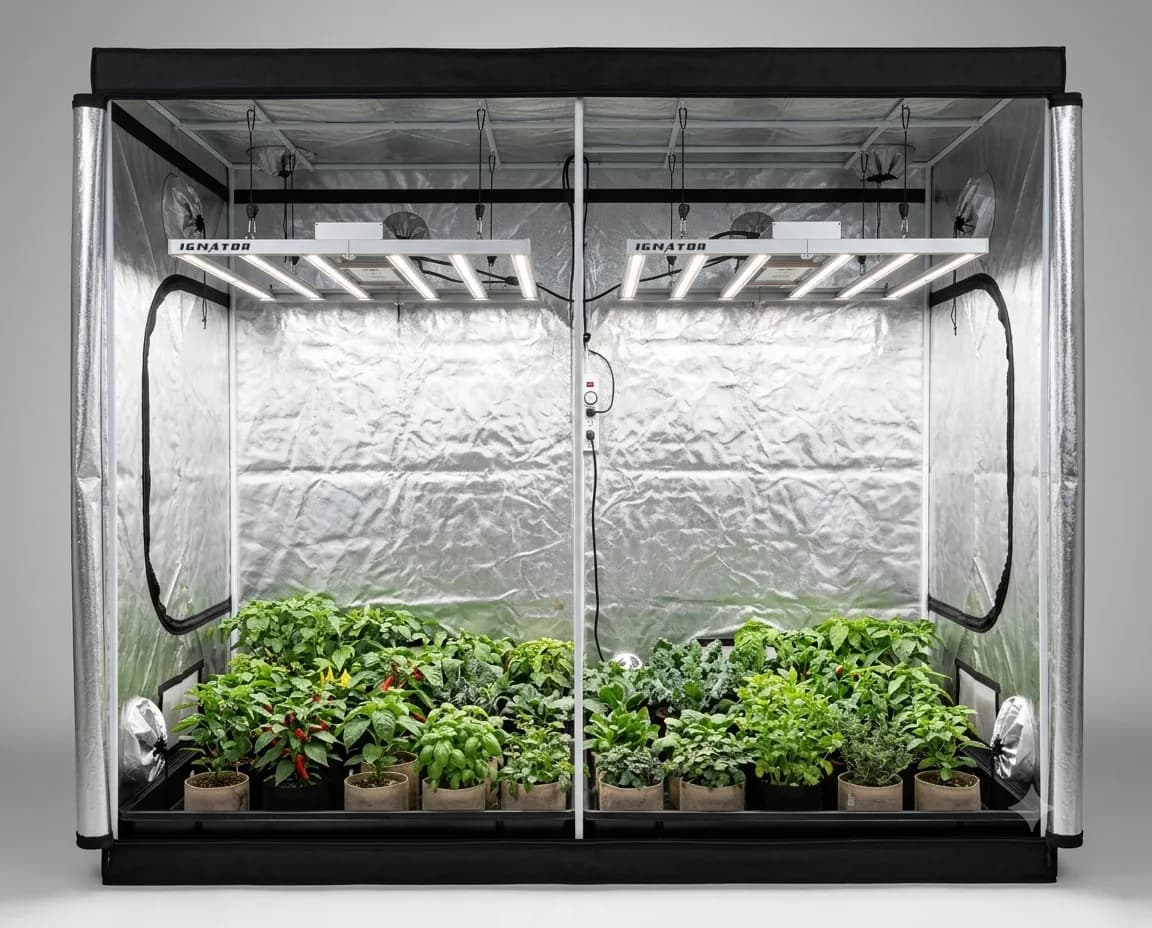
Why tent size determines everything else in the grow
The tent determines the lighting power you can install, the extraction system you will need and the number of plants you will be able to manage.
Getting the size wrong is the most expensive mistake in an indoor grow, because it forces you to repeat the investment within a few months: a tent that is too small falls short as soon as the plant enters flowering and stretches, while an oversized one drives up spending on lighting, extraction and climate control with no real need for it.
How to work out the space you need
- 1-2 plants in 11-15L pots: 60x60x160 cm tents are enough. This is the usual starting point for anyone beginning who wants to keep every variable under control without complicating things.
- 3-4 plants: 80x80x180 cm or 100x100x200 cm, depending on the training technique. If you use scrog nets, you need more horizontal than vertical surface.
- SCROG grows: prioritise width and depth over height, since the goal is to build a flat, even canopy rather than a tall plant.
- Untrained grows (autoflowering or tall photoperiod plants): prioritise height, at least 180-200 cm, to leave room for the stretch in flowering without the plant reaching the light.
Rule of thumb: allow 1 plant per 0.25-0.3 m² of tent floor area if you are going to train and prune; without pruning, reduce it to 1 plant per 0.4-0.5 m².
The link between tent size and lighting power
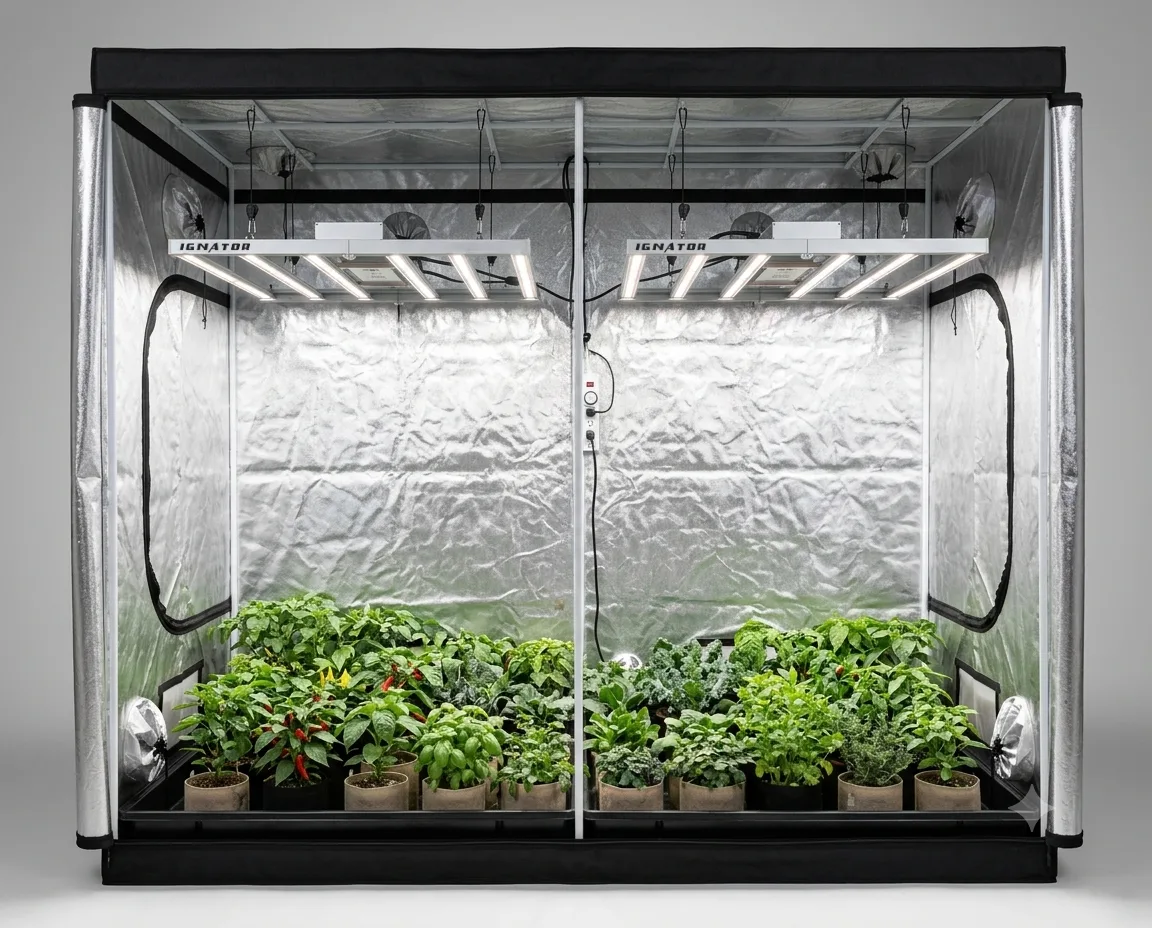
Tent size and lighting power always go together. As a rough reference for full-spectrum LED:
| Tent size | Recommended LED power | Approx. no. of plants |
|---|---|---|
| 60x60 cm | 100-150 W | 1-2 |
| 80x80 cm | 150-240 W | 2-4 |
| 100x100 cm | 240-320 W | 4-6 |
| 120x120 cm | 320-480 W | 6-9 |
Installing more power than the space and the extraction can handle does not improve results: it generates excess heat, light stress and higher electricity consumption with no proportional return at harvest.
Extraction and ventilation according to size
The extractor fan should renew the air inside the tent every 1-3 minutes.
The higher the lighting power, the more heat generated and the more extraction required.
For example, a 100x100x200 cm tent (2 m³) needs an extractor fan rated at a real 60 m³/h at least, not counting the airflow lost to the carbon filter and ducting, which can cut extractor performance by 20-30%.
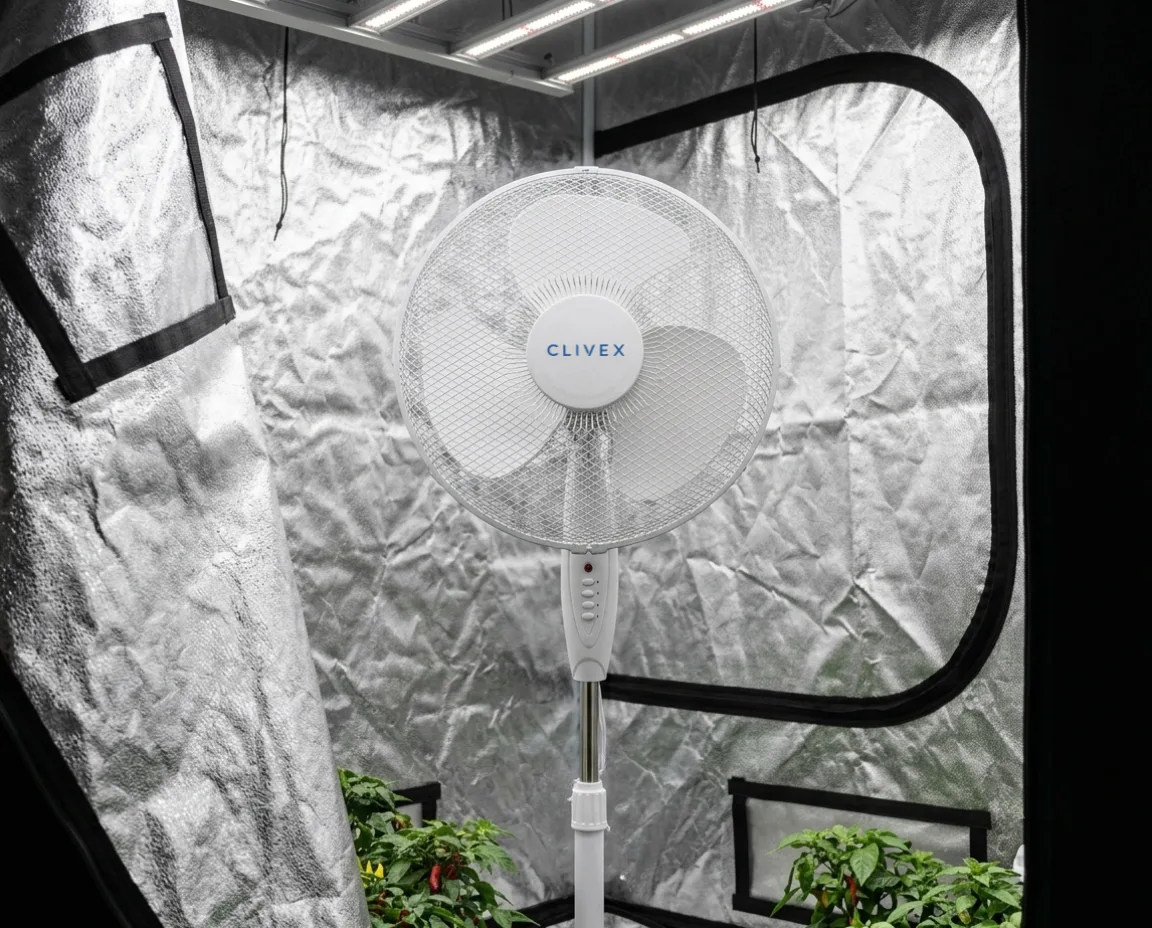
Do not overlook internal air movement: one or two oscillating fans inside the tent, independent of the extractor, strengthen the stem, reduce the risk of fungal problems and help CO₂ circulate evenly around the tent.
Materials and fabric thickness
Fabric tents made of 600D block light better, are more resistant to tearing and hold the internal temperature better.
For professional or intensive use, 600D pays back the price difference in the first harvest, because it reduces light leaks (critical for photoperiod plants during the dark phase) and stands up better to continuous use of zips and access windows.